How to Maximize Space in a NYC Apartment Renovation
The best NYC apartments are not always the biggest ones. They are the ones that have been designed to work.
Most apartments in New York City were not designed around how people actually live today. Layouts made sense for a different era, a different lifestyle, and different expectations about how rooms should relate to each other. The result is apartments that feel smaller and less functional than their square footage should allow.
A thoughtful renovation can change that, often dramatically, without adding a single square foot. What follows is a practical guide to the most impactful things you can do in a renovation to make your NYC apartment feel larger, more functional, and more intentional. It draws on real experience renovating apartments across Brooklyn and Manhattan, and it focuses on what you can actually change structurally and architecturally, not furniture arrangement or paint color.
Start with the Layout, Not the Finishes
The single most impactful thing you can do in a renovation is reconsider the layout. Most NYC apartments, especially older prewar and postwar buildings, were designed around conventions that no longer reflect how people live. Separate rooms, narrow corridors, oversized closets in the wrong places, galley kitchens tucked behind walls. A renovation is the opportunity to question all of it.
Finish choices matter, but they are cosmetic. Layout changes are structural, and they are what actually change how a space feels to live in.
Opening the kitchen
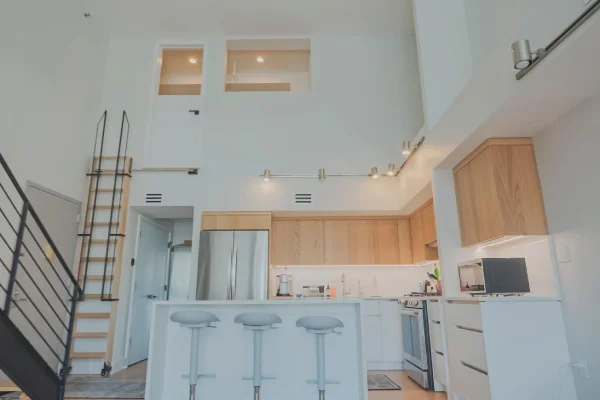
Removing or partially removing the wall between a galley kitchen and the living space is one of the most common and highest-impact moves in NYC apartment renovations. It creates visual depth, improves how light travels through the apartment, and makes the whole space feel significantly larger without changing the square footage. For many apartments, this single change transforms the way the home feels. You can see examples of this in our completed projects.
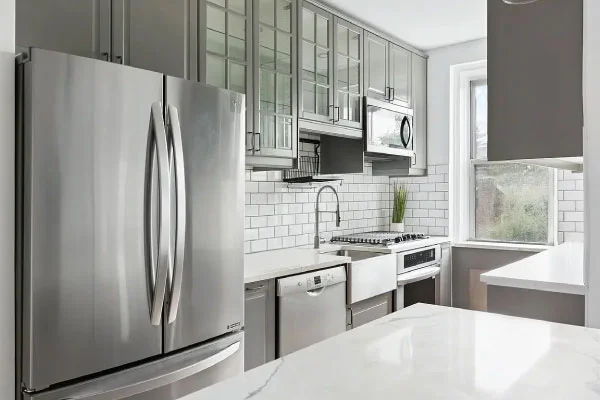
Layout changes are what actually change how a space feels to live in. Finishes come after.
Eliminating dead circulation space
Many apartments waste meaningful square footage on corridors and entry areas that serve no real function beyond connecting one room to another. Reconfiguring around them can recover usable space for living, storage, or a dedicated workspace. It requires thinking about the apartment as a whole rather than room by room.
Rethinking bedroom boundaries
In studios and one-bedrooms, the boundary between sleeping and living space is worth reconsidering. A well-designed partial partition, built-in shelving unit, or glass panel can define zones without closing them off, preserving the openness of the space while creating a sense of separation that makes the apartment function more like a two-room home.
One thing to keep in mind: some layout changes require board approval, and in certain building types structural changes may face restrictions. Understanding what your building allows before designing around a specific move avoids surprises later.
DCON Note
Layout reconfiguration is one of our core strengths. We approach every apartment renovation by questioning the existing plan before committing to any design direction. Sometimes the most valuable move is the one no one had considered before walking the space.
Built-ins Do What Furniture Cannot
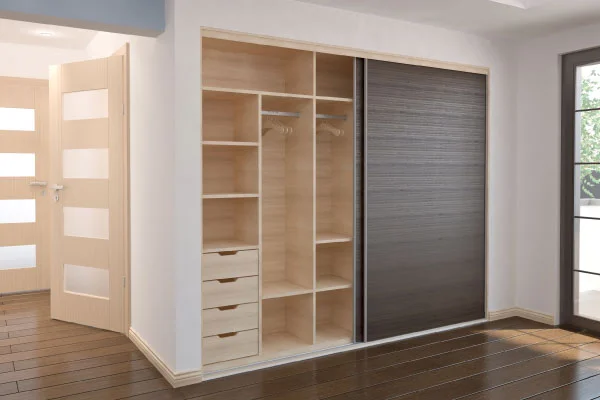
Freestanding furniture takes up floor space and leaves gaps that read as visual clutter. Built-in storage and cabinetry use the full volume of a wall, floor to ceiling, and create a cleaner, more intentional feel that makes a space read as larger. In a compact NYC apartment, the difference is significant.
Custom carpentry is one of the most underutilized tools in apartment renovations. It is also one of the most enduring investments. Well-designed built-in cabinetry and millwork adds storage, reduces visual noise, and gives a space an architectural quality that freestanding pieces never quite achieve.
- Floor to ceiling storage: Utilizing the full height of a wall for storage, with cabinetry reaching the ceiling, eliminates the visual noise of items stored on top of furniture and makes ceilings feel taller. In a room with eight or nine-foot ceilings, this is one of the most effective ways to change how the space feels.
- Window seats with storage: In apartments with deep window bays, a built-in window seat with storage underneath adds seating, a reading nook, and meaningful storage without consuming additional floor area. It also frames the window in a way that makes it a feature rather than just an opening.
- Built-in wardrobes: A properly designed built-in wardrobe does significantly more than a standard closet or freestanding wardrobe of the same footprint, through better internal organization, use of full ceiling height, and clean integration into the room so it reads as architecture rather than furniture.
- Home office alcoves: With more people working from home, carving a dedicated workspace into an alcove or underutilized wall area has become one of the most requested moves in apartment renovations. It keeps work contained and the rest of the apartment clear.
DCON Note
Built-in storage and cabinetry is something we think about carefully on every project. The goal is always to design storage that feels like part of the architecture, not something added on top of it.
Light and Sight Lines Make Space Feel Bigger
Beyond layout and storage, how a space is lit and how far the eye can travel within it have a significant effect on how large it feels. These are not afterthoughts. They are design decisions that belong in the renovation from the start.
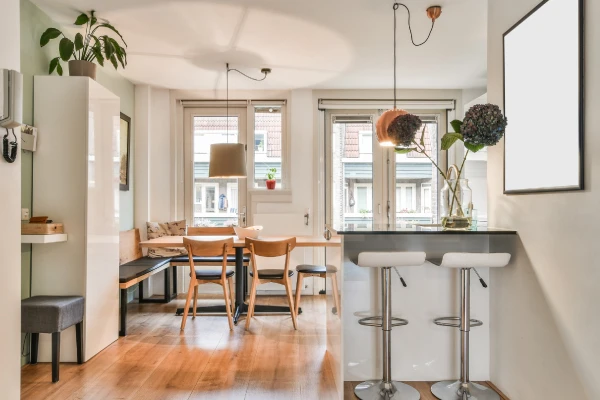
- Borrowed light: Where possible, replacing solid walls or doors with glazed partitions or interior windows allows light to travel between rooms, making both feel larger and more connected. In apartments where natural light is concentrated in one area, borrowed light can redistribute it meaningfully.
- Continuous flooring: Running the same flooring material throughout the apartment, rather than changing it between rooms, eliminates visual interruptions that make spaces feel smaller and more segmented. It is one of the simplest and most effective ways to create a sense of flow.
- Ceiling height: In apartments with lower ceilings or existing drop ceilings and bulkheads, removing these where possible recovers perceived volume. Even a few inches makes a noticeable difference in how a room feels.
- Integrated lighting: Recessed lighting and integrated under-cabinet or in-cabinet lighting reduces the need for floor and table lamps that take up floor space and create visual clutter. It also gives much greater control over how a room is lit at different times of day.
DCON Note
These principles are integrated into our design process from the start. Light, proportion, and visual flow are considered alongside layout and storage, not after the fact.
The Kitchen and Bathroom Are Where Space Is Won or Lost
In most NYC apartments, the kitchen and bathroom are where layout inefficiency is most concentrated. They are also the rooms where a thoughtful renovation can deliver the most dramatic spatial improvement.
Kitchen
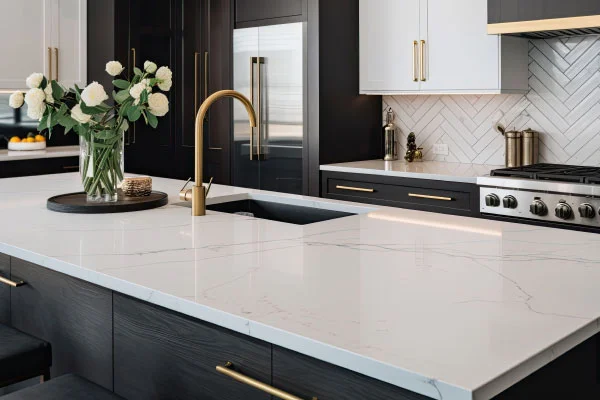
A closed-off galley kitchen in a small apartment is one of the fastest ways to make the whole home feel cramped. Opening the kitchen to the living space, even partially, changes the way the entire apartment reads. Beyond that, smart kitchen design maximizes storage and workflow within a compact footprint: integrated appliances, full-height cabinetry, and a considered layout that eliminates wasted movement and counter space.
The kitchen is also the room where the quality of the renovation is most visible. It is worth approaching it as a design project, not just a fixture replacement.
Bathroom
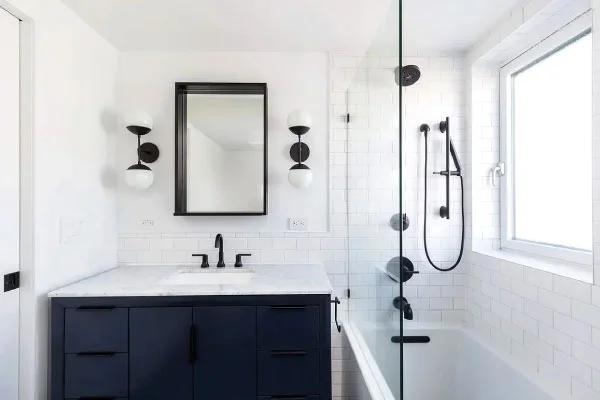
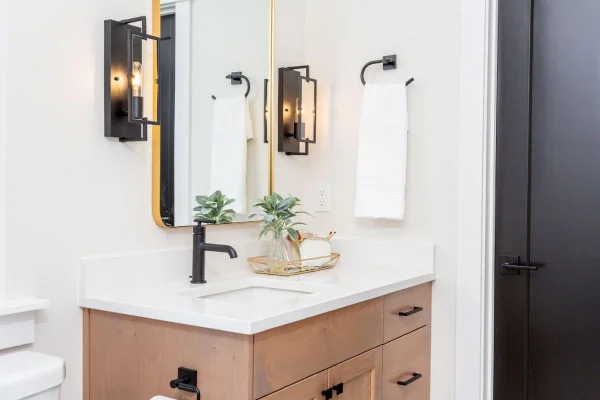
NYC bathrooms are often undersized and laid out in ways that made sense for plumbing runs rather than for the people using them. A bathroom renovation is the opportunity to reconsider the fixture arrangement, improve storage, and create a room that feels considered. In some apartments there is an opportunity to slightly expand the bathroom footprint by borrowing space from an adjacent closet or corridor, which can meaningfully change how the room functions.
The kitchen is also the room where the quality of the renovation is most visible. It is worth approaching it as a design project, not just a fixture replacement.
DCON Note
We approach kitchen and bathroom renovations as spatial problems first. The design follows from understanding how the room needs to function and how it connects to the rest of the apartment.
What to Think Through Before You Start
Before committing to a direction, a few things are worth working through carefully:
- Understand your building’s constraints: Some layout changes require board approval, and in co-ops particularly, structural changes may face specific restrictions. Knowing what your building allows before designing around a specific move saves time and avoids having to redesign later.
- Think about how you actually live: The most effective space-maximizing renovations are driven by real behavioral patterns, not aspirational ones. Where do things end up? What do you never use? What does the apartment need to do that it currently does not? Those answers shape a renovation that genuinely works.
- Prioritize the moves with the most impact: In a constrained budget, layout changes and built-in storage tend to deliver more lasting value than finish upgrades alone. Design and structural decisions are also harder to undo later, so they deserve the most careful attention upfront.
If you are not sure where to start, that is exactly what an initial consultation is for. We walk the space with you, ask the right questions, and help identify what is actually possible. Take a look at how our process works to get a sense of what that looks like.
The Bottom Line
The constraints of NYC apartment living are real, but they are not fixed. A thoughtful renovation can change how a space feels, how it functions, and how much you enjoy being in it, often significantly.
The key is approaching it as a design problem rather than a decorating exercise. Layout, light, storage, and proportion are the levers. The finishes come after.
If your apartment feels like it is working against you, it might be worth a conversation about what a renovation could actually do. Browse our completed projects for a sense of what is possible, and reach out whenever you are ready to talk.
🔗 Explore More
Learn more about what DCON can do for your home:
Recent Articles
Categories
- Apartment Renovation (32)
- Basement Renovation (7)
- Bathroom Remodeling (28)
- Brownstone Renovation (16)
- Design | Build (19)
- Eco-friendly Renovation (4)
- Exterior Renovations (4)
- Home Remodeling (20)
- Home Renovation (27)
- Interior Renovation (31)
- Kitchen Remodeling (26)
- Other (4)
Related Articles