Open vs. Closed Kitchen: Which Layout Is Right for Your NYC Apartment?
Ask ten NYC homeowners whether they want an open or closed kitchen and you will get strong opinions on both sides. Ask them why, and the answers reveal a lot about how they actually live.
The open vs. closed kitchen debate comes up in almost every apartment renovation conversation, and it comes up because both options have real appeal and real tradeoffs. It is also a decision that is genuinely different depending on the apartment and the person living in it. There is no universally right answer.
What follows is a balanced look at both layouts, the NYC-specific factors that should shape the decision, and a framework for thinking through which direction makes sense for your situation. It draws on real experience with kitchen renovations across Brooklyn and Manhattan and it is written to be useful rather than prescriptive.
The Case for an Open Kitchen
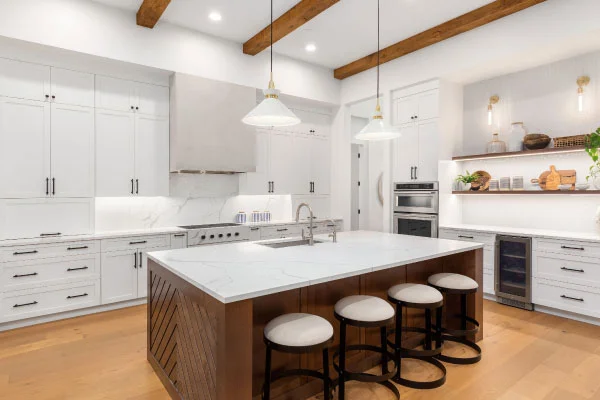
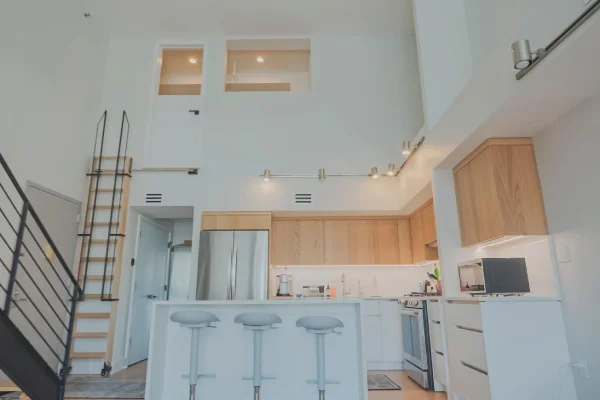
Opening the kitchen to the living space is one of the most transformative moves in a NYC apartment renovation. For many apartments, particularly smaller ones where every square foot matters, it is also one of the most impactful.
Creates visual depth and perceived space
Removing the wall between a galley kitchen and the living room allows the eye to travel further, making both spaces feel larger. In apartments under 800 square feet this effect is significant and immediate.
Improves natural light distribution
Many NYC galley kitchens are interior spaces with little or no direct light. Opening to the living space allows light from windows to reach the kitchen, changing how both rooms feel throughout the day.
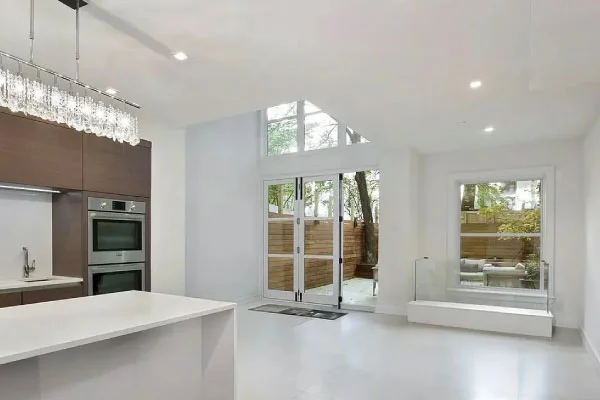
In a small NYC apartment, opening the kitchen is often less about design preference and more about making the space actually work.
Changes how the apartment functions socially
An open kitchen allows whoever is cooking to remain part of the conversation. For people who entertain regularly, or who simply do not want to feel cut off while cooking, this matters considerably.
Makes the kitchen a design feature
A well-designed open kitchen with quality cabinetry and finishes becomes part of the living space rather than a utility room tucked behind a wall. This can meaningfully improve both the feel and the perceived value of the apartment.
The tradeoffs are real and worth thinking through honestly. An open kitchen means cooking odors, noise, and the visual state of the kitchen are always present in the living space. It means the kitchen needs to look good all the time, not just when guests are coming. For some people that is a reasonable trade. For others it is not.
DCON Note
Opening a kitchen wall is one of the most requested moves we see in NYC apartment renovations. It is often transformative, but we always walk through the tradeoffs before recommending it. The right answer depends on the apartment and the person.
The Case for a Closed Kitchen
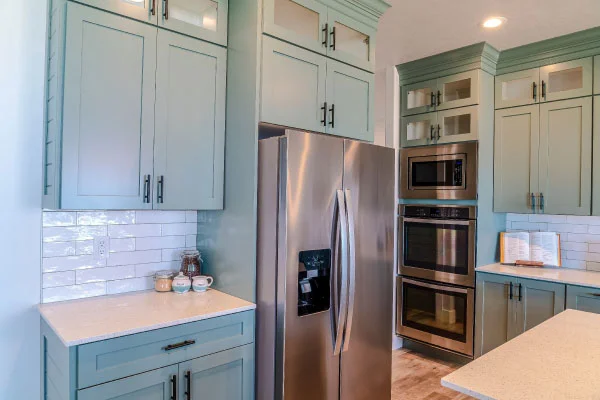
The closed kitchen has fallen somewhat out of fashion in design media, but in practice it remains the right answer for a meaningful number of NYC apartments and lifestyles. The conversation deserves more nuance than the trend toward open plans typically allows.
- Contains cooking mess and odors: A closed kitchen keeps the visual and aromatic evidence of cooking separate from living and dining spaces. For people who cook frequently, particularly aromatic or high-heat cooking, this is a genuine quality-of-life consideration that an open plan cannot fully address.
- Provides a dedicated workspace: A contained kitchen is a focused workspace with defined boundaries. Some people find this more efficient and less distracting than cooking in a room that is simultaneously a living space.
- Reduces the visual burden of tidiness: An open kitchen is always on display. A closed kitchen allows the mess of cooking and cleanup to exist behind a door without affecting the feel of the rest of the apartment. That is not a small thing for many people.
- Can preserve storage: In some apartment configurations, the walls around a closed kitchen contain meaningful storage. Opening the kitchen may require rethinking storage elsewhere in the apartment, which adds scope and cost to the project.
In smaller apartments, a closed kitchen can make the overall space feel cramped and disconnected. But in a larger apartment where the kitchen occupies its own wing rather than a galley against the living room, the closed layout can feel considered rather than limiting. The floor plan matters as much as the preference.
DCON Note
We see closed kitchens work very well in the right context. The key is understanding whether the closed layout is a problem that needs solving or simply a design choice worth preserving
At a Glance
A quick reference before we get into the NYC-specific factors:
Open kitchen | Closed kitchen | |
Space and light | Makes the apartment feel larger, improves light flow | Can feel contained but works well in larger apartments |
Lifestyle | Good for entertaining, stays connected to living space | Better for privacy, contains mess and cooking odors |
Maintenance | Always visible, demands consistent tidiness | Mess stays behind the door |
Building constraints | May require board approval or permits | Board notification may still apply, but structural approvals less likely |
Resale | Broadly popular with buyers currently | Depends more on design quality than layout type |
The NYC-Specific Factors That Matter
Beyond personal preference, there are factors specific to NYC apartment living that should shape this decision and that most kitchen design guides do not address.
Building constraints
In co-ops and condos, removing a kitchen wall may require board approval and in some cases a DOB permit, particularly if the wall contains plumbing, electrical, or structural elements. Understanding what your building allows before designing around a wall removal is an important early step. See our guide to renovating a condo or co-op in NYC for more context on this.
Apartment size and proportion
The calculus is different in a 600-square-foot studio than in a 1,400-square-foot two-bedroom. In smaller apartments, opening the kitchen is often transformative. In larger apartments the case is less clear-cut and depends more on how the rooms relate to each other. The space-maximizing post we wrote covers this in more detail for anyone thinking through the broader layout question: How to Maximize Space in a NYC Apartment Renovation.
Ventilation
Ventilation is worth thinking through early. How your building handles kitchen exhaust, and what is feasible given the existing setup, can influence what is practical in an open kitchen. It is a conversation worth having with your contractor before the layout is decided.
Resale considerations
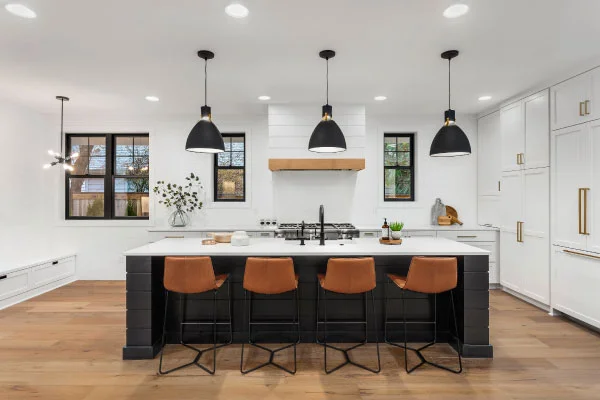
Open kitchens are broadly popular with buyers in the current market, which gives them a general edge from a resale perspective. That said, the quality of the kitchen design matters more than whether it is open or closed. A well-designed closed kitchen outperforms a poorly designed open one at resale and in daily life.
DCON Note
These are the conversations we have at the start of every kitchen renovation. The right layout depends on the apartment, the building, and the person, not on what is currently fashionable.
The Middle Ground Worth Considering
The open vs. closed framing can make this feel like a binary decision. In practice, some of the best solutions sit somewhere in between, and they are worth considering before committing to either extreme.
Partial openings
Removing the upper portion of a wall while keeping a counter-height base creates a visual and spatial connection without fully eliminating the separation. It addresses the light and perceived-space issues of a closed kitchen while preserving some of the containment. In the right apartment this can be a more considered solution than either option alone.
Pass-throughs
A well-designed pass-through opening in a kitchen wall provides a functional connection between kitchen and living space without requiring full removal. In buildings where structural or approval considerations make a full wall removal complicated, this can be a practical and attractive alternative.
Concealed kitchens
In some apartments, a kitchen designed to visually disappear behind cabinetry or a sliding panel offers the best of both: the ability to open the space when desired and close it off when not. This approach requires careful design but can work well in the right context, particularly in studios or open-plan apartments where the kitchen is in the same room as the living space by default.
DCON Note
We rarely treat this as a strict binary. The design conversation almost always surfaces a more nuanced solution that fits the specific apartment better than either extreme would.
A Framework for Deciding
Rather than prescribing a direction, here are the questions worth working through before committing:
- How do you actually use your kitchen: Do you cook frequently and enthusiastically, or is the kitchen used lightly? Heavy cooking with strong odors and significant cleanup favors containment. Light use favors openness.
- How do you feel about the kitchen being visible: Are you comfortable with the kitchen always being part of the visual field of the living space? There is no wrong answer, but knowing your honest preference matters.
- What does the apartment need spatially: Is the apartment feeling cramped because of a closed-off kitchen, or is the kitchen layout itself the problem? These are different issues with different solutions.
- What does your building allow: Before designing around a wall removal, confirm what your building requires and whether a permit is needed. This shapes what is actually on the table.
- What does the existing structure contain: A wall with plumbing or structural elements has different implications than a simple partition. Some of this can be assessed visually during a consultation, but in many cases the full picture only becomes clear once the wall is opened up.
These are exactly the questions we work through in initial consultations. Walking the space, understanding how the person lives, and thinking through what will actually work in the specific apartment. If you are working through this decision, we would be glad to have that conversation.
The Bottom Line
There is no universally right answer to the open vs. closed kitchen question. There is a right answer for your apartment and how you live in it, and that answer becomes clear when you look at the specific factors that apply to your situation rather than defaulting to what is currently fashionable.
Take a look at our completed kitchen projects to see how we have approached this decision across a range of apartments and layouts. And if you are working through a kitchen renovation, reach out whenever you are ready to talk it through.
🔗 Explore More
Learn more about what DCON can do for your home:
Recent Articles
Categories
- Apartment Renovation (32)
- Basement Renovation (7)
- Bathroom Remodeling (28)
- Brownstone Renovation (16)
- Design | Build (19)
- Eco-friendly Renovation (4)
- Exterior Renovations (4)
- Home Remodeling (20)
- Home Renovation (27)
- Interior Renovation (31)
- Kitchen Remodeling (26)
- Other (4)
Related Articles