How to Design a Bathroom That Feels Like a Boutique Hotel
The bathroom is the one room in your apartment where you are completely alone with the design. It is worth getting it right.
Most NYC apartment bathrooms were designed to fit within a footprint, not to feel like anything in particular. They are functional. They are fine. And they are a long way from the kind of bathroom you remember from a hotel that got it right.
A bathroom renovation is one of the highest-impact things you can do in an apartment. When the decisions are made well, the result can feel genuinely transformative, not just cleaner or more updated, but like a different kind of space. This post covers what those decisions actually are, drawing on real experience with bathroom renovations across Brooklyn and Manhattan.
What Boutique Hotel Bathrooms Actually Do Differently
The appeal of a boutique hotel bathroom is not purely about expensive materials. Most people have stayed somewhere that spent a lot on the wrong things and still felt ordinary. What makes those rooms memorable is a set of design decisions that create a specific feeling: calm, considered, and complete.
Understanding what those decisions are is what allows you to bring them into a renovation, rather than just admiring them from a hotel room.
- Every surface is considered: There is no surface in a well-designed bathroom that was not thought about. Grout lines, edge profiles, the way tile meets the floor, the proportion of the vanity relative to the room. The details are consistent and intentional throughout, and that consistency is what makes a space read as designed rather than assembled.
- Restraint over quantity: Boutique hotel bathrooms rarely have a lot happening. A limited material palette, clean lines, and space to breathe are more effective than trying to include every feature. Less, resolved well, outperforms more every time.
- Lighting does significant work: Lighting in a well-designed bathroom is layered and considered. It is often the thing that most distinguishes a space that feels elevated from one that simply has good materials.
- Storage is invisible: Clutter breaks the feeling. The best bathroom designs absorb storage into the architecture so the surfaces stay clear. You do not notice the storage because it is not visible.

Less, resolved well, outperforms more every time. A limited material palette and clean lines do more for a bathroom than a long list of features.
The Decisions That Matter Most
These are renovation decisions, not styling choices. They are made during design and executed during construction. Getting them right is what produces the result.
Layout first
Before materials, before fixtures, before anything else, the layout determines what is actually possible. In many NYC apartments, the bathroom layout is a product of where the plumbing happened to land, not of any design intention. A renovation is the opportunity to question that.
Even modest layout changes, relocating a vanity, rotating a toilet, reconfiguring the shower, can meaningfully improve both the function and the feel of the room. Layout changes involve plumbing relocation and typically require permits, so they add cost and complexity. But they also carry the highest impact on the final result. It is worth the conversation before committing to working within the existing footprint.
A limited material palette
The most common mistake in bathroom renovations is too many materials. Three tile patterns, two countertop materials, mixed metal finishes. The result feels busy rather than resolved. Boutique hotel bathrooms typically use two materials well rather than five materials adequately.
Choosing a primary tile and a complementary accent, a single stone for surfaces, and one metal finish throughout creates a cohesion that reads as designed. The restraint is the point, not a limitation.
Large format tile and continuous surfaces
Large format tile creates fewer grout lines, which makes a space feel cleaner and larger. Continuing the same tile from floor to wall, or from the shower into the main bathroom floor, eliminates visual interruptions that fragment a small room. These are simple decisions with significant impact on how the finished space feels.
Integrated storage
A niche in the shower wall. A recessed medicine cabinet that sits flush with the wall. A floating vanity with considered cabinetry that leaves the floor visible. Storage that is built into the architecture rather than added on top of it keeps surfaces clear and contributes to the clean, resolved feeling that defines well-designed bathrooms.
Fixture quality and consistency
The fixtures are the hardware of the bathroom, and their quality is felt every time the room is used. Consistent metal finishes throughout, a well-proportioned faucet and hardware set, a shower system that feels considered. These are not places to cut budget in a bathroom that is meant to feel elevated. The rest of the room will tell on them.

DCON Note
These decisions are made during the design phase and executed during construction. The renovation is where they get built. Getting them right on paper before construction begins is what produces the result clients are hoping for.
Lighting: The Detail Most People Underestimate
Lighting transforms a bathroom more than almost any other single decision, and it is consistently the one that gets the least attention during renovation planning. Most bathroom renovations replace the existing fixture with a similar one and call it done. The rooms that feel genuinely different do something more considered.
- Task lighting at the vanity: Overhead downlights above a vanity cast unflattering shadows on the face. Side-lit or front-lit vanity lighting solves this and is a signature of well-designed bathrooms. Wall sconces flanking the mirror, or a backlit or lighted mirror, are more effective and more considered than a single overhead fixture above the sink.
- Ambient lighting separate from task lighting: A bathroom with only one light source is either too bright or too dim depending on what you are doing in it. A separate ambient circuit that can light the room softly, independent of the vanity lighting, changes the feeling of the space significantly. It is a wiring decision made during construction that costs relatively little and delivers a lot.
- Shower lighting: A recessed waterproof fixture inside the shower, rather than a ceiling fixture outside it, changes the shower experience in a noticeable way. It is a small decision during the rough-in phase with a real impact on the finished result.
- Warm color temperature throughout: Bathroom lighting should be warm, not cool. Cool white light makes a bathroom feel clinical. Warm light makes it feel like a place worth spending time in. This applies to every fixture in the room.

A bathroom with only one light source is either too bright or too dim depending on what you are doing in it. A separate ambient circuit that can light the room softly, independent of the vanity lighting
What This Looks Like in a NYC Apartment Context
Most NYC apartment bathrooms are compact. The principles above apply regardless of size, but they need to be applied with the constraints of the space in mind. A few decisions work particularly well in smaller bathrooms, and they are worth knowing before the design conversation starts. See also our post on how to maximize space in a NYC apartment renovation for broader context on spatial decisions in compact apartments.
- A frameless glass shower enclosure: Removes the visual interruption of a shower curtain or framed door and makes the room feel larger. In a small bathroom this is one of the highest-impact single decisions. It also photographs well, which matters for resale.
- A wall-hung vanity: Floating the vanity off the floor visually increases the perceived floor area and makes the room feel less dense. It also makes cleaning easier, which is a practical benefit in a small space used every day.
- Floor to ceiling tile in the shower: Taking tile to the ceiling rather than stopping at a standard height makes the ceiling feel taller and the shower feel more generous. The cost difference is relatively modest for the visual impact it delivers.
- A full-width mirror: A mirror that spans the full width of the vanity wall reflects light and doubles the perceived depth of the room. A smaller mirror centered above the sink does neither of those things as effectively.

DCON Note
A bathroom renovation in a compact NYC apartment is a spatial design problem as much as a materials problem. What works in a 45-square-foot bathroom is different from what works in a 90-square-foot one, and the design should be specific to the space.
Where to Invest and Where to Be Flexible
Not every line item in a bathroom renovation deserves the same level of investment. Here is how we typically guide clients through these decisions:
Worth investing in
- Tile: Tile covers more surface area in a bathroom than anything else and is the decision you will live with longest. Quality and design matter here more than anywhere else in the room. This is not where to cut budget.
- Shower system: The shower is the part of the bathroom used most. A well-designed shower system with good water pressure, a considered layout, and quality fixtures is worth the investment. The shower experience is what people remember about a bathroom.
- Vanity and storage: A well-designed vanity with quality hardware and integrated storage shapes the daily experience of the bathroom more than almost anything else. It is the piece the room is organized around.
Where to be more flexible
- Toilet: A clean, well-proportioned toilet from a reliable brand does the job well. The design character of the bathroom does not come from this fixture.
- Accessories: Towel bars, toilet paper holders, and robe hooks are the easiest things to upgrade later without touching the renovation. Getting the architecture right first matters more than perfecting the accessories.
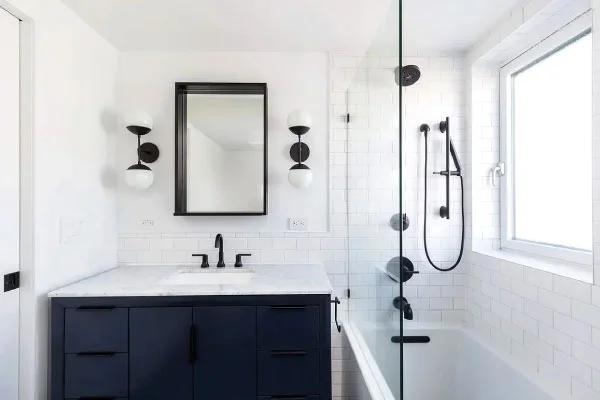
The shower is the part of the bathroom used most. A well-designed shower system with good water pressure, a considered layout, and quality fixtures is worth the investment.
The Bottom Line
The bathroom that feels like a boutique hotel is not the product of an unlimited budget. It is the product of considered decisions made in the right order, with a clear sense of what matters most.
Layout before materials. A limited palette, resolved well. Lighting treated as a design element rather than an afterthought. Storage absorbed into the architecture. Fixtures that are consistent and quality throughout.
Get those right and the result takes care of itself. If you are thinking about a bathroom renovation and want to talk through what is possible for your specific space, we would be glad to have that conversation. Take a look at our completed projects to see how we have approached bathrooms across a range of apartments and budgets.
🔗 Explore More
Learn more about what DCON can do for your home:
Recent Articles

Categories
- Apartment Renovation (34)
- Basement Renovation (7)
- Bathroom Remodeling (29)
- Brownstone Renovation (16)
- Design | Build (20)
- Eco-friendly Renovation (4)
- Exterior Renovations (4)
- Home Remodeling (22)
- Home Renovation (29)
- Interior Renovation (31)
- Kitchen Remodeling (27)
- Other (4)
Related Articles