Why Renovation Projects Go Over Budget and How to Prevent It
Almost every homeowner who has been through a renovation has a story about costs that were higher than expected. Most of those stories start the same way.
Renovation budget overruns are one of the most common and most stressful parts of the renovation experience. They happen to experienced homeowners and first-timers alike, and they happen for reasons that range from genuinely unpredictable to entirely avoidable. Understanding which is which is the first step to managing them.
This post breaks down the real causes of renovation budget overruns, separates what can be planned for from what cannot, and gives practical guidance on how to approach your project budget with realistic expectations. It draws on experience managing full apartment renovations across Brooklyn and Manhattan and is written to be genuinely useful rather than reassuringly vague.
The Causes That Are Hard to Predict
Some renovation costs come up because of conditions that were not visible until the work began. In NYC specifically, where a large proportion of the housing stock was built 80 to 150 years ago, this is a consistent reality rather than an exception.
- Conditions behind walls
- Building requirements that emerge during approval
- Material availability and pricing: Supply chain conditions, lead time changes, and price fluctuations between when a project is scoped and when materials are purchased can affect the total. This is particularly relevant for imported materials and custom items with long production times.
That is what contingency budgets are for. A contingency is not a pessimistic addition to the budget. It is a realistic acknowledgment that renovation work involves unknowns, and a project that has room for them runs more smoothly than one that does not.
These are not signs that something went wrong. They are the nature of renovation work, particularly in older buildings. The honest response is not to pretend they will not happen, but to plan for the possibility that they will.
The Causes That Are Preventable
Not all budget overruns are unpredictable. A significant portion of the ones we see come from causes that could have been avoided with better planning, clearer communication, or more realistic expectations at the start.
Scope changes during construction
This is the single most consistent cause of preventable budget overruns. Adding a room to the renovation mid-project, upgrading materials that were already specified, or changing a design decision that had already been built around all cost more during construction than the same decisions made during design. Work that is already done sometimes needs to be undone, and that costs real money.
The discipline to make decisions during design and hold to them during construction is one of the most effective things a homeowner can do to protect their budget.
Incomplete scope at the start
Projects that go to construction without a fully resolved scope are set up to expand. When decisions are deferred rather than made during design, they tend to get made under time pressure during construction, and time-pressured decisions in construction are rarely budget-friendly ones.

DCON Note
We flag known risk areas during pre-construction based on what we can assess before the walls open. We cannot predict everything, but experience with NYC buildings means we know what to look for and how to respond when something comes up.
Unrealistic initial budget
A budget set based on wishful thinking rather than real project knowledge creates a gap that has to close somewhere. Either scope gets cut in ways that compromise the result, or the budget increases to cover what was always actually required. Neither outcome is a good one.
Materials selected after construction begins
When materials are specified and ordered during construction rather than during pre-construction, lead times create gaps in the schedule that cost money in labor downtime and extended project duration. Selecting and ordering materials during pre-construction is one of the most impactful things a well-run project does for the overall budget. See our post on how long a full apartment renovation takes in NYC for more on how pre-construction planning affects the overall timeline.
No contingency in the plan
Going into a renovation without contingency is not optimism, it is a plan that has no room for anything to go differently than expected. In a renovation, something always does. A contingency of 10 to 15 percent is appropriate for most full apartment renovations. For brownstones and older buildings, or projects with significant structural scope, 15 to 20 percent is more realistic.

DCON Note
Our pre-construction process is specifically focused on resolving as many decisions as possible before construction begins. Incomplete plans at construction day one are one of the most consistent predictors of a project that runs over, in both time and budget.
The NYC-Specific Factors
NYC renovations have characteristics that make budget management more complex than in other markets. These are not anomalies. They are the conditions that define renovation work here.
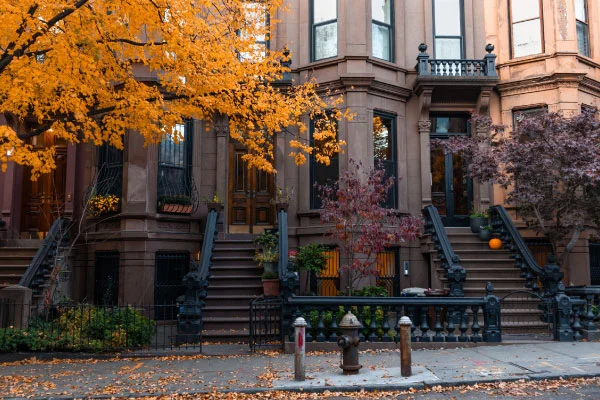
- Older building stock: A high proportion of NYC apartments and brownstones were built before modern building codes. The likelihood of encountering outdated systems, hazardous materials, or deteriorated structural elements is higher here than in markets with newer housing stock. Contingency is not optional in this context.
- Building approval requirements: The approval process in co-ops, condos, and landmark districts introduces variables that affect both timeline and cost. Requirements that emerge during this process can affect scope in ways that were not in the original plan, and the timeline implications of approval delays have their own cost consequences.
- Labor and material costs: NYC labor costs are among the highest in the country. Material costs reflect import and logistics costs that are higher in a dense urban market. Projects budgeted against national averages rather than NYC-specific experience consistently come in higher than expected.
- Sequencing complexity: Renovation work in NYC apartments often involves more complex sequencing than comparable work elsewhere, because of building rules about working hours, elevator access, and the coordination demands of working in occupied residential buildings. Disruptions to sequencing cost time and money.
How to Plan More Realistically
Understanding why overruns happen is useful. Here is what to actually do about it:
Build contingency in from the start
A contingency of 10 to 15 percent is appropriate for most full apartment renovations. For brownstones and older buildings, or projects with significant structural scope, lean toward 15 to 20 percent. See our full apartment renovation budget breakdown for more context on how to think about the overall budget allocation.
Resolve decisions before construction begins
Material selections, layout decisions, fixture specifications, and finish choices made during design cost nothing to change. The same changes made during construction cost time, labor, and sometimes rework. The design phase exists to answer questions before they become construction problems. Use it.
Be honest about your budget from the first conversation
The budget conversation with your contractor is only useful if it is based on real numbers. A contractor who knows your actual budget can tell you honestly whether your goals are achievable within it. One who does not know your budget is working without the information they need to guide you well.
Understand what is in and out of scope
A clear and documented scope of work at the start of a project is one of the best protections against scope creep. When what is included is written down, it is much clearer when something new is being added and what the cost implications are. Our guide on how our process works explains how we approach this at DCON.
DCON Note
These are the conditions we work in every day across Brooklyn and Manhattan. Our process is built around them, which means fewer surprises when they show up.
What to Ask a Contractor Before You Start
The contractor you choose has a significant impact on how predictably your project runs. A few questions worth asking before you commit:
- How do you handle conditions that come up behind walls that were not part of the original scope?
- How do you communicate cost changes when they arise?
- What does your pre-construction process look like and how does it help manage the budget?
- Can you walk me through how a recent project was handled when something unexpected came up?
- How do you document scope so both parties are clear on what is included?
How a contractor answers these questions tells you more about how your project will actually run than their portfolio alone. The answers reveal how they think about process, communication, and accountability, which is what determines whether budget conversations are handled well or not.
The Bottom Line
Renovation budgets go over for real reasons, and not all of them are preventable. What is preventable is going in without a realistic plan, without contingency, and without a contractor who communicates clearly when things change.
The goal is not a renovation that costs exactly what was originally estimated. The goal is a renovation where you understand where the money is going and why, and where surprises are handled honestly rather than buried until the end.
If you are starting to think about a renovation and want a realistic conversation about what it might involve, we would be glad to talk.
Want a realistic picture of what your renovation will involve?
Schedule a free consultation!
🔗 Explore More
Learn more about what DCON can do for your home:
Recent Articles


Categories
- Apartment Renovation (34)
- Basement Renovation (7)
- Bathroom Remodeling (29)
- Brownstone Renovation (16)
- Design | Build (20)
- Eco-friendly Renovation (4)
- Exterior Renovations (4)
- Home Remodeling (22)
- Home Renovation (29)
- Interior Renovation (31)
- Kitchen Remodeling (27)
- Other (4)
Related Articles