5 Kitchen Design Trends We Are Loving in NYC Homes Right Now
We spend a lot of time in kitchens. Designing them, building them, and finishing them. Here are five things we are loving in the kitchens we are working on right now.
This is not a list assembled from trend reports or Pinterest boards. These are directions we are seeing clients choose and designs we are actively specifying on projects across Brooklyn and Manhattan. Some have been building for a few years. Others have arrived more recently. All of them are producing results we are proud of.
If you are planning a kitchen renovation and thinking about where to take the design, these are worth knowing about.
1. Warm, Earthy Tones Replacing White and Grey
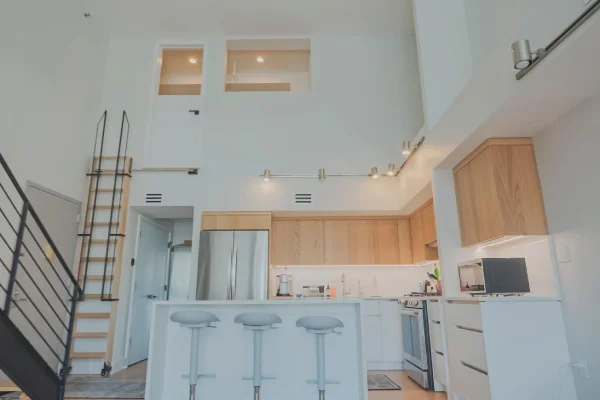
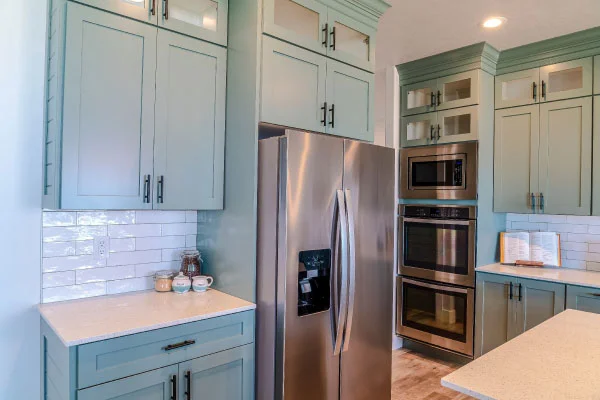
The all-white kitchen has had a long run. What we are seeing replace it is not a dramatic swing to the opposite, but a considered shift toward warmer, earthier tones: off-whites, warm linens, clay, terracotta, and muted greens. These palettes feel more considered and more livable than the stark white kitchens that dominated the last decade, and they tend to age better.
In NYC apartments specifically, warmer tones work well because they complement the natural light conditions and materials common in prewar buildings. The warmth of a cream or clay cabinet against original hardwood floors reads as intentional rather than trendy. It also means the kitchen does not feel clinical or cold in a city where apartments can receive limited direct sunlight.
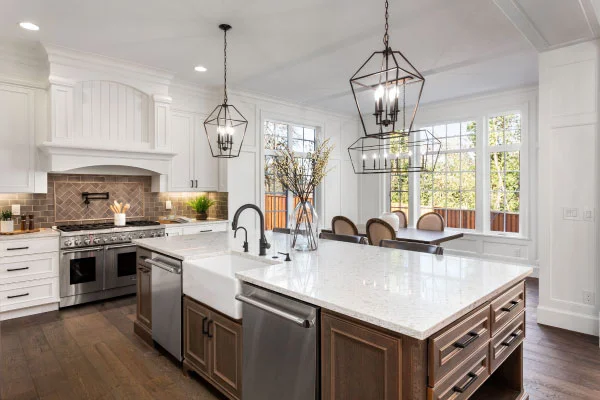
In practice this looks like cabinetry in a warm white or linen tone, paired with a natural stone countertop with warm veining, and hardware in a finish that matches the temperature of the palette. The palette is typically tight, with each element reinforcing the warmth of the others.
Worth knowing before you commit
Warmer tones require more care with the overall material palette. Mixing warm and cool tones within the same kitchen tends to read as unresolved. If you go warm, commit to it throughout.
2. Integrated Appliances and the Invisible Kitchen
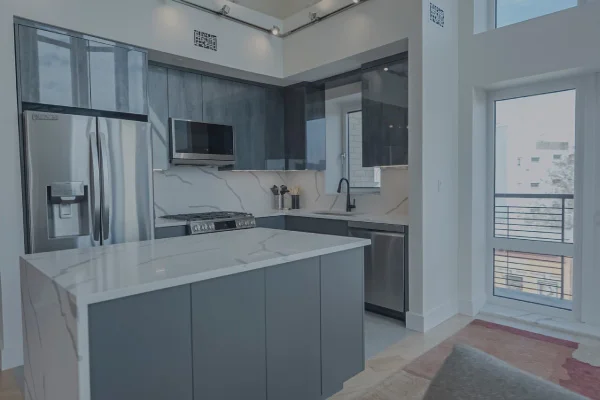
Panel-ready appliances that disappear into the cabinetry are no longer reserved for the highest-end renovations. We are specifying them more across a range of budgets because the result is increasingly what clients want: a kitchen that reads as a room rather than an appliance showroom. If you want to understand how this affects the overall kitchen budget, our post on kitchen renovation costs in NYC covers the tradeoffs in detail.
In NYC apartments where the kitchen is often open to or visible from the living space, this matters more than in homes where the kitchen is a contained room. The visual continuity of a kitchen where the refrigerator, dishwasher, and range hood disappear into the cabinetry changes how the whole apartment feels. It also connects directly to the question of open versus closed kitchen layouts: an integrated kitchen reads as part of the living space in a way that a freestanding appliance kitchen rarely does.
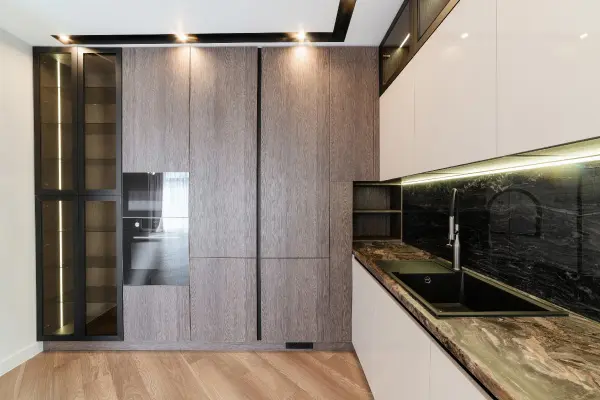
In practice this looks like panel-ready refrigerator and dishwasher fronts that match the cabinetry, an integrated or built-in range hood, and where budget allows, a concealed range. The kitchen reads as a wall of millwork when not in active use.
Worth knowing before you commit
Integrated appliances carry a cost premium over freestanding equivalents. They also require more precise cabinetry dimensions and more coordination during design. The investment is in the total result, not any individual appliance.
3. Fluted and Textured Cabinetry Details
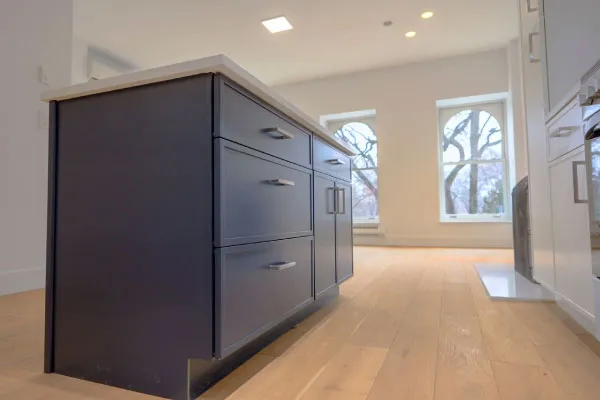
After years of flat-front, handle-less cabinetry, texture is coming back in a considered way. Fluted fronts, reeded glass inserts, and subtly textured panels add depth and visual interest without competing with the rest of the kitchen. This is not the ornate cabinetry of an earlier era. It is restraint with detail.
In NYC apartments, this works particularly well because it adds character without requiring large amounts of space. A fluted island panel or a row of reeded upper cabinets introduces texture in a focused way that makes the kitchen feel more considered and more personal. It is one of the moves that most reliably separates a kitchen that feels designed from one that feels generic.
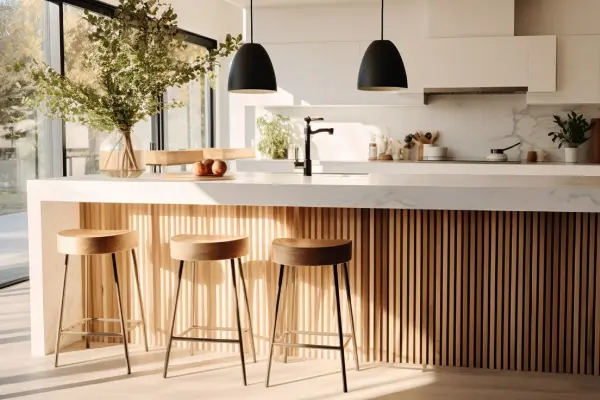
In practice this looks like fluted fronts on the island base or lower cabinets, with flat-front uppers to balance. Or reeded glass inserts in a select few upper cabinets to break up a solid wall of cabinetry without opening it entirely. Hardware varies by project and palette, chosen to complement the texture rather than compete with it.
Worth knowing before you commit
Fluted and textured details draw attention and work best when used selectively rather than throughout. A kitchen where every surface is textured loses the contrast that makes the detail read. Pick the surfaces where it matters most and keep the rest clean.
4. Stone Chosen for Character, Not Just Quality
Carrara marble has been the default luxury stone for a long time. What we are seeing now is clients choosing stone for its specific character rather than its category. Dramatic book-matched slabs, leathered quartzite, honed limestone, stones with strong movement and visible variation. The stone is becoming a design feature rather than a background surface.
In NYC kitchens where the countertop is often the primary material statement, a stone with real character does more for the room than a neutral stone applied generously. One interesting slab well-placed outperforms two safe slabs everywhere. We are also seeing more willingness to let the stone be the focal point of the kitchen rather than the cabinetry, which reverses the usual hierarchy and often produces more distinctive results.
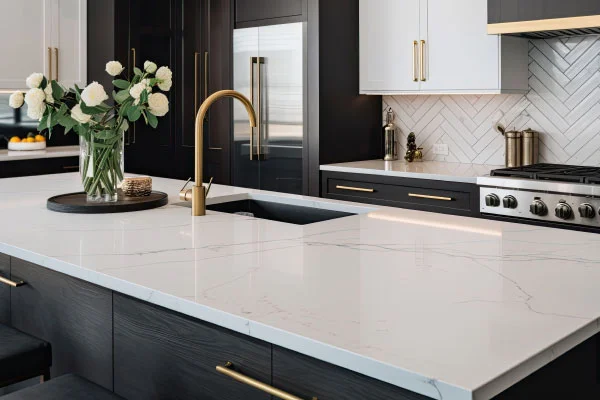
In practice this looks like a single slab of bookmatched marble or quartzite on the island, treated as the focal material of the kitchen, with cabinetry in a quieter tone that does not compete. Or a leathered finish on a dark quartzite that adds tactility alongside visual interest.

Worth knowing before you commit
Stones with strong movement require careful layout planning during fabrication. The slab needs to be seen before it is cut, and the yield from a dramatic slab can be lower than from a more uniform one. Character stones also tend to be priced per slab, so total cost depends on coverage area.
5. Open Shelving Used Sparingly and Intentionally
Open shelving has been in and out of fashion for years. What we are seeing now is not the full open-shelf kitchen that was popular several years ago, but something more considered: one or two sections of open shelving within an otherwise closed kitchen, used to display objects that are worth seeing and to break up what might otherwise be a heavy wall of cabinetry.
In NYC apartments where kitchens are often visible from living spaces, open shelving done well adds warmth and personality that a fully closed kitchen sometimes lacks. The key word is sparingly. One shelf section in the right place reads as designed. Open shelving throughout reads as a commitment to tidiness that most people cannot sustain in a kitchen that is actually used.
In practice this looks like a single run of open shelves between two sections of closed upper cabinetry, or floating shelves flanking a window where upper cabinets would block light. The shelves hold a curated selection of objects, not everything that did not fit in the closed cabinets.

Worth knowing before you commit
Open shelving is a lifestyle commitment as much as a design one. It looks best when what is on it is edited and consistent. Be honest about how you actually use your kitchen before specifying it in more than one or two places.
A Final Note on Trends
Trends are useful as a starting point, not a prescription. The best kitchens we build are the ones that reflect how the client actually lives, with design decisions that happen to align with what is current rather than decisions made because something is current.
Each of the five directions above is worth considering if it genuinely suits the apartment and the person. None of them are right for every project, and none of them will feel right if they are specified without a clear sense of why.
If you are thinking about a kitchen renovation and want to talk through what would work for your specific space, we would be glad to have that conversation. Take a look at our completed projects to see how some of these directions have come together on real projects.
🔗 Explore More
Learn more about what DCON can do for your home:
Recent Articles

Categories
- Apartment Renovation (34)
- Basement Renovation (7)
- Bathroom Remodeling (29)
- Brownstone Renovation (16)
- Design | Build (20)
- Eco-friendly Renovation (4)
- Exterior Renovations (4)
- Home Remodeling (22)
- Home Renovation (29)
- Interior Renovation (31)
- Kitchen Remodeling (27)
- Other (4)
Related Articles